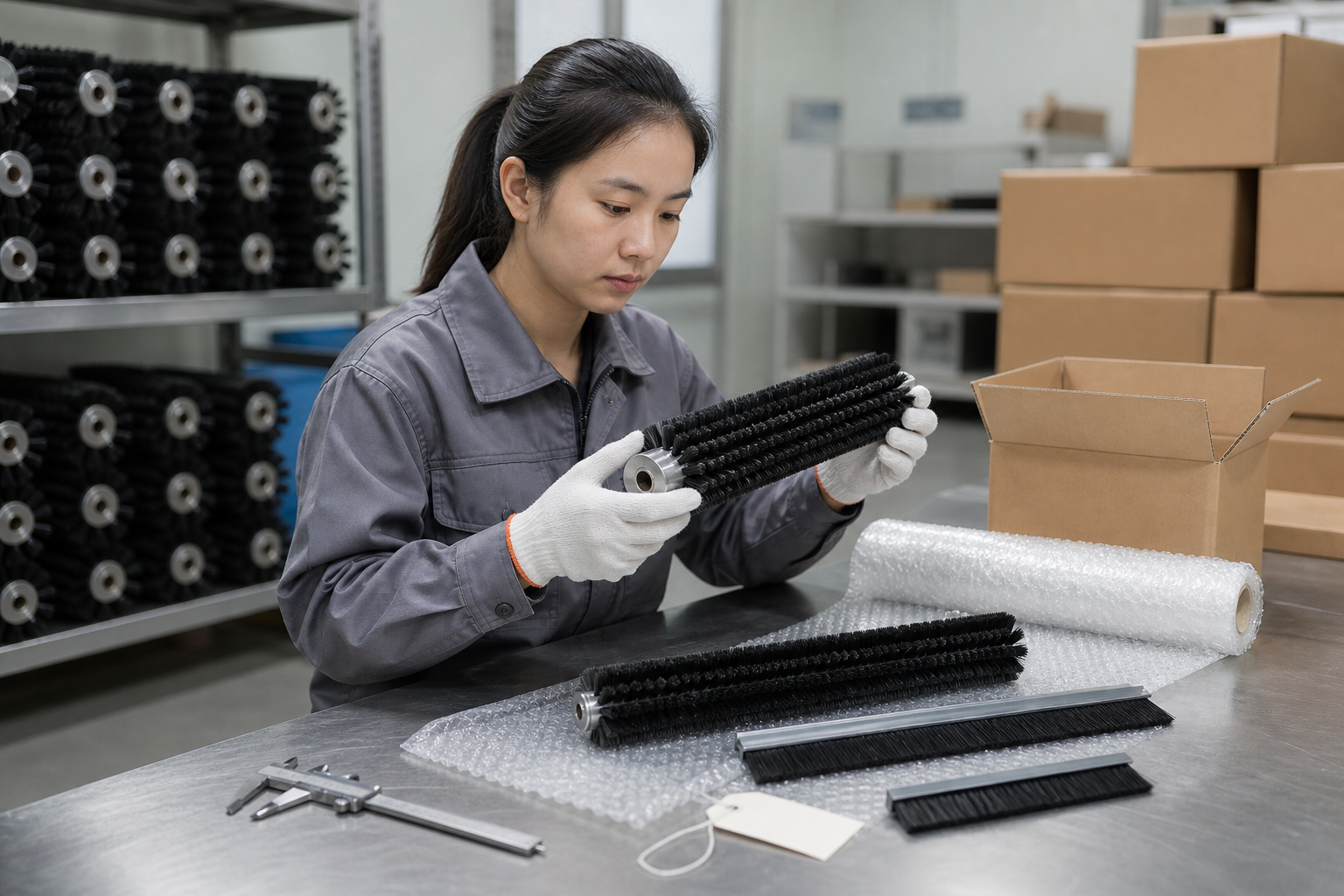
Why custom projects should start with samples
Custom brushes need to match the customer's machine, working conditions, and target result. Even when dimensions look similar, filament stiffness, density, contact pressure, and mounting details can change the final performance.
Sample approval moves risk to the early stage. Before batch production, the customer can validate installation, cleaning or sealing effect, wear behavior, and appearance requirements.
What should be checked during sample approval
Check critical dimensions, mounting interface, filament material, filling density, noise, wear rate, and target effect. For rotating brushes, pay attention to speed, guarding, and balance-related requirements.
Sample feedback should be recorded in writing, including dimensional changes, material changes, packing requirements, and labels. This creates a clear basis for production and inspection.
How to move from sample to batch
After sample approval, lock the drawing, photos, parameter sheet, or sample ID, and define acceptance criteria in the order. For repeat orders, record machine model, batch information, packing method, and delivery requirements.
This reduces repeated communication and prevents specification changes caused by memory gaps.