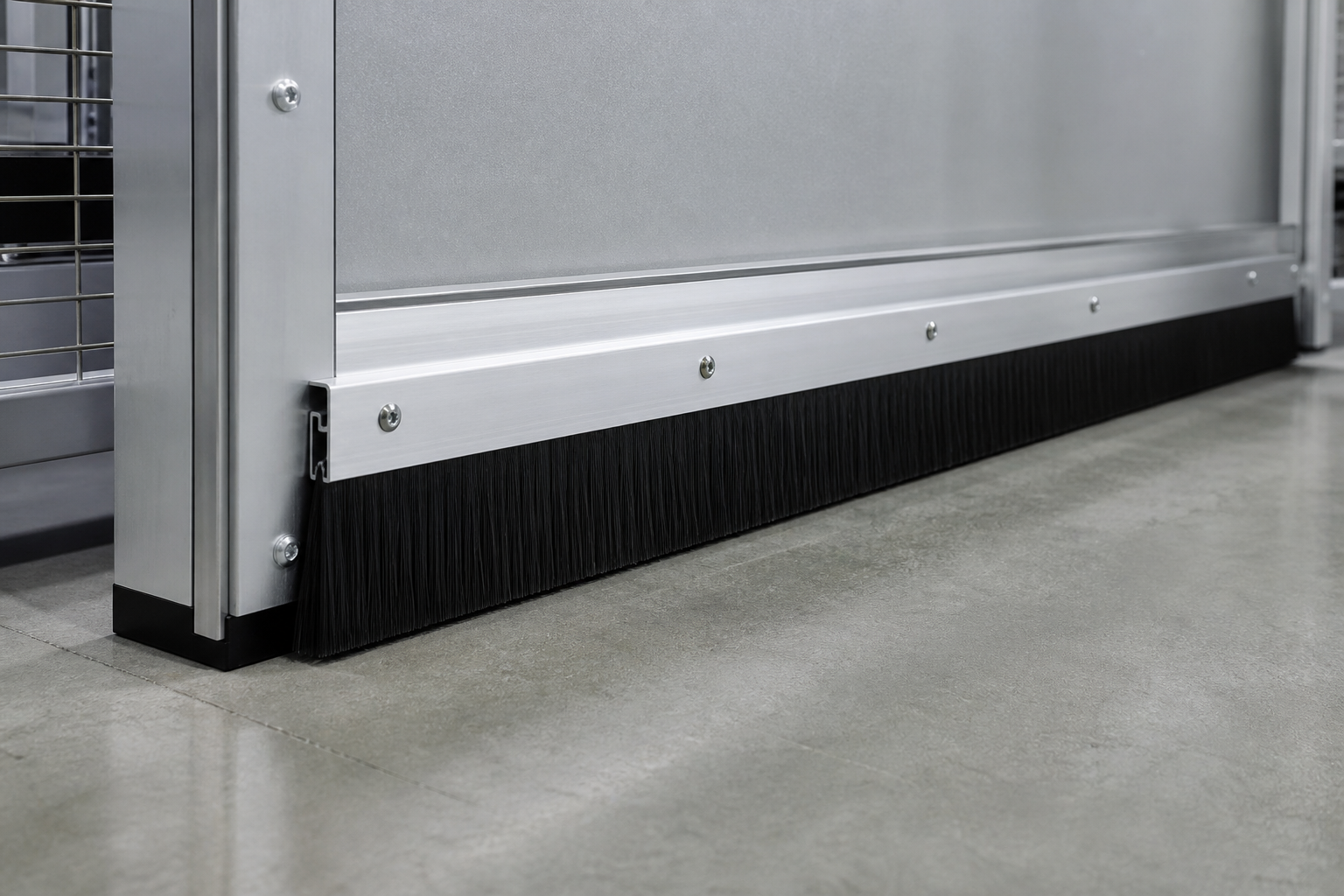
What problems can strip brushes solve?
Strip brushes are often used around equipment gaps, door edges, conveyor transitions, cabinet openings, and dust or draft control areas. Compared with rigid seals, flexible filaments can tolerate some dimensional variation and uneven surfaces.
In sealing and dust control, strip brushes usually reduce dust, debris, drafts, and light splash rather than provide a fully airtight seal.
Parameters often overlooked
Gap size and compression are critical. Too little compression weakens the sealing effect; too much compression accelerates wear and may deform the mounting structure.
Filament material should be selected based on temperature, moisture, chemicals, static, and scratch risk. General dust control, food-adjacent lines, outdoor door sealing, and high-wear applications may require different materials.
What to provide for an RFQ
Provide gap width, total brush length, trim length, holder dimensions, fixing method, and site photos. For replacement work, photos of the old brush and holder cross-section are helpful.
If the brush is used on a moving door or mechanism, also describe the movement direction, cycle frequency, washdown conditions, and outdoor exposure.